
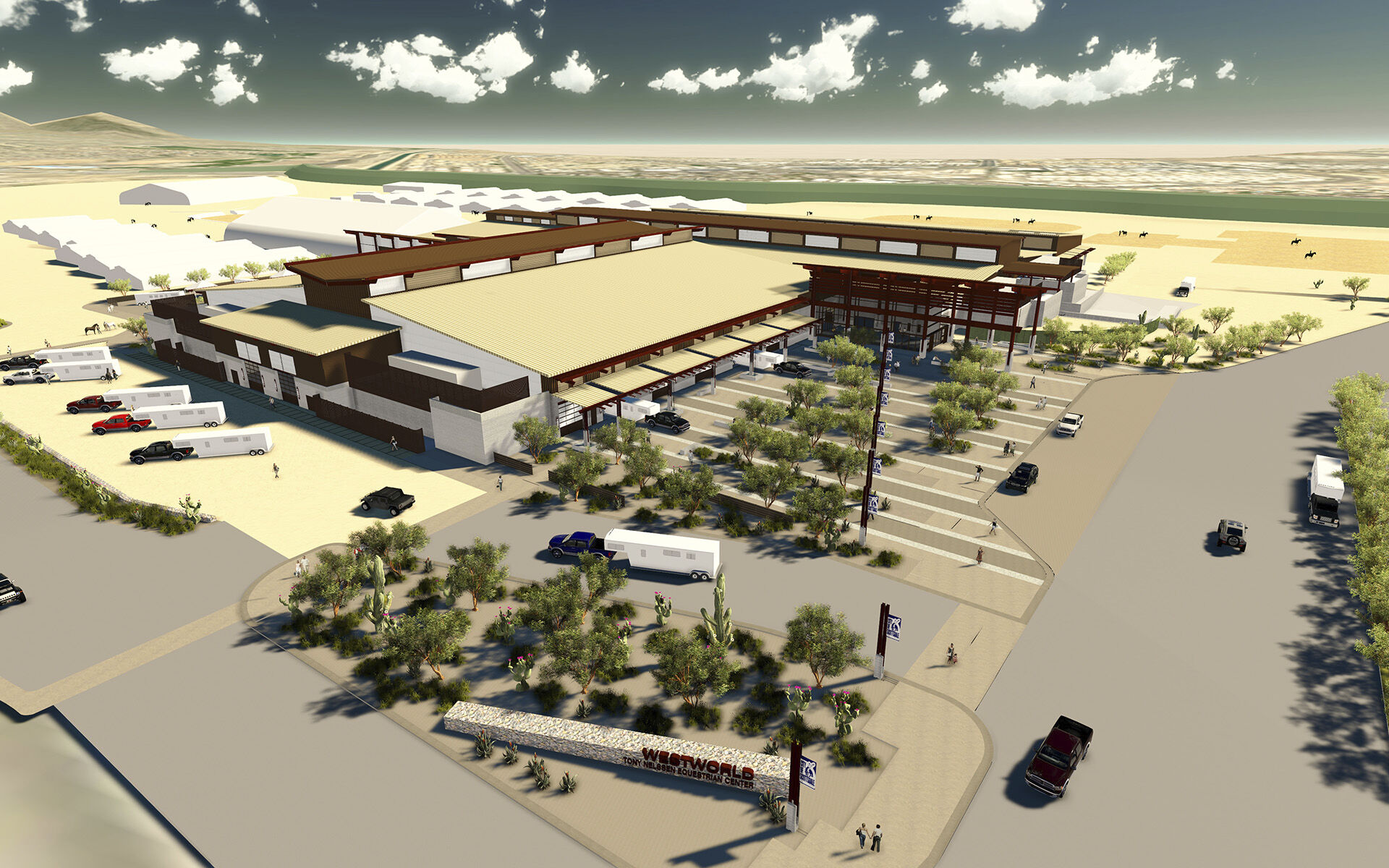
WestWorld of Scottsdale Tony Nelssen Equestrian Center
Project Name
Tony Nelssen Equestrian Center
Size (sq ft)
300,000
HEI Project Profile - Long
The City of Scottsdale Capital Improvement Project known as the Tony Nelssen Equestrian Center Expansion consisted of completely enclosing the existing 100,000 SF open-air facility, as well as the expansion and upgrades to the current equidome facility and finally the addition of a north and south building for a total of 259,000 SF. The new climate controlled facility extends usage of the facility to attract additional, year round events. The project was phased to ensure continued use during the busy event season. The City of Scottsdale was seeking LEED Gold certification for the project. ------- Alternate Writeup (JBD added from 2018 0911 Brown County Expo Center Redevelopment) The WestWorld Tony Nelssen Equestrian Center shows the world that the City of Scottsdale is the “West’s Most Western Town.” It includes a 310,000 SF multi-purpose equestrian arena, stables, concessions, an expo flat floor space that is capable of “extreme event overlay” including dirt equestrian arenas, and fixed seating for 4,500 people. The existing 120,000 SF equidome was not enclosed and had no heating or air conditioning system. A major goal of the project was to add an air conditioning system to the building to increase the number of events that could occur in the summer, and to make it a viable 12 month facility. Through the life cycle analysis, Henderson Engineers determined the best HVAC system based on the project’s loads and budget. The energy savings of the initial preconceived system (a central plant with chillers and boilers) would not pay for itself before the equipment had to be replaced. The resulting approved system (packaged roof mounted direct expansion cooling units with an evaporative condenser section) saved over $4 million in first cost and had only slightly higher energy costs. In fact, the alternate system was more efficient in the summer time than the central plant, which was a very important finding since the main goal was to host more events during the summer.
Keywords