
Home / Insights / Thought Leadership
Door Locking Requirements in NFPA 101
As published by Consulting-Specifying Engineer
Door locking can be confusing for many occupancies but can especially be daunting in health care occupancy settings due to many factors. Door locking is a complex process. Because of this, we often run across misconceptions about how separate equipment and systems come together to operate, what is and is not permitted and how to accomplish a compliant approach.
Health care occupancies have patients who are incapable of self-preservation, patients who require additional specialized security measures to protect themselves and patients who require security measures from the outside world. Caring for those patients is further complicated by a building type that is usually vast in size and includes numerous additions, expansions, renovations, and various levels of other active and passive fire protection measures including fire rated construction, fire sprinkler protection and fire alarm systems.
The result is a complex web that often leads to noncompliant door locking arrangements. In this article, we will explore the door locking requirements of NFPA 101: Life Safety Code and how to successfully apply them to health care occupancies. The 2012 edition NFPA 101 will be the focus of this piece as the Centers for Medicare & Medicaid Services requires this edition for compliance within health care occupancies.
NFPA 101 egress basics
To begin this discussion, we need to review the three basics of egress from a facility that are well defined in NFPA 101:
- The first component typically encountered in a building is exit access, which is the portion of means of egress that leads to an exit.
- Next up is an exit, which is either a door to the exterior in a single-story facility or a space that is separated from the rest of a structure by fire rated construction (e.g., a stair) in a multistory building.
- Finally, once you leave a building, you will use exit discharge from an exit to a public way (e.g., a sidewalk). These components are important to understand as we talk through door locking.
- Access-controlled egress.
- Delayed egress.
- Full locking arrangements.
- Patients with clinical needs or security needs.
- Patients with specialized protective measures.
- Elevator lobby exit access-controlled egress.
Full locking arrangements
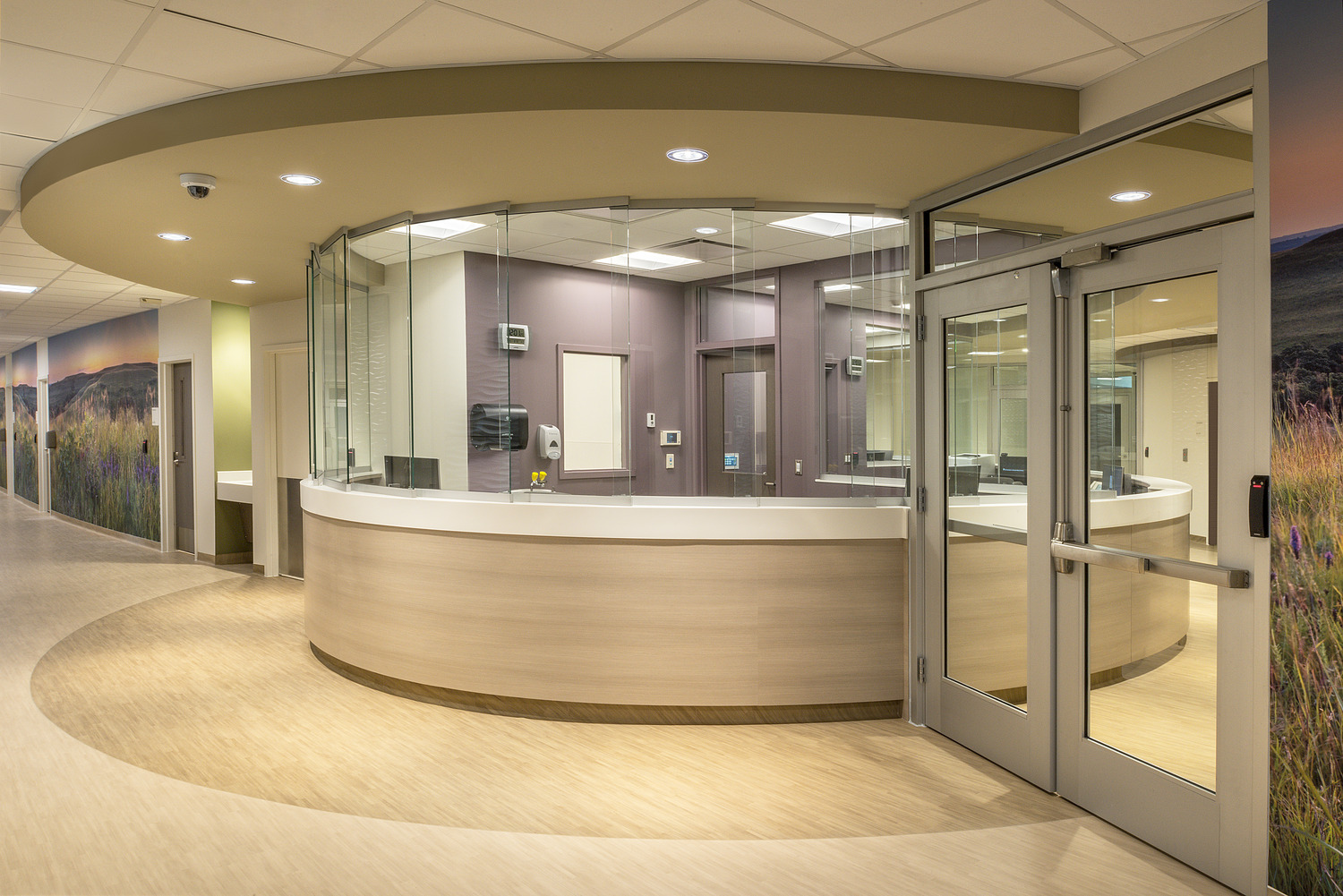
Patients with clinical needs or security needs (18/19:2.2.2.5.1 and 18/19.2.2.2.6) The first locking arrangement permitted in health care occupancies is for situations where patients pose a security threat or where the clinical needs of patients require specialized security measures. Forensic and detection units are examples of units where patients pose a security threat. Psychiatric units and Alzheimer’s or dementia units are examples of units or areas that might have clinical needs that justify door locking. To lock the means of egress doors in these units or areas of the health care occupancy requires the following:- Rapid removal of occupants by one of the following means:
- Remote control ability of the locking devices from within the smoke compartment.
- Keys carried by staff at all times.
- Other such reliable means available to staff at all times. Other reliable means may include the use of a keypad or card/badge reader.
- Only one locking device is permitted on each door in the space or unit.
- Rapid removal of occupants by one of the following means:
- Remote control ability of the locking devices from within the smoke compartment.
- Keys carried by staff at all times.
- Other such reliable means available to staff at all times. Other reliable means may include the use of a keypad or card/badge reader.
- Smoke detection is located in every space throughout the locked space or locked doors can be remotely unlocked at a location in the locked space that is constantly attended. If the smoke detection option is used, this means that every room in the locked space has detection including EVS closets, any mechanical or electrical rooms, patient rooms, etc. This is above and beyond the level of detection normally required for an unlocked space in a health care occupancy and comes with additional cost implications during initial construction as well as additional inspection, testing and maintenance costs for the life of the space. More facilities end up selecting the remote unlock option, which also meets the requirement noted above for rapid removal of occupants.
- The building is protected throughout with an approved fire sprinkler system that is supervised.
- Loss of power will release the locks.
- The locks also independently release by:
- Activation of the required smoke detection system.
- Water flow in the fire sprinkler system.
- Lock must be listed in accordance with ANSI/UL 294.
- Building is protected by a fire alarm and supervised fire sprinkler system.
- Activation of the fire alarm occurs by waterflow in the fire sprinkler system, approved detection system in the lobby and initiation, other than manual pull stations and will release the lock.
- Loss of power will release the lock and remain until manually reset.
- A two-way communication system is provided in the elevator lobby that communicates with a central control point that is constantly attended by staff who are trained, capable and authorized to assist during an emergency.
- Neither delayed egress nor access control can be applied to this locking arrangement.
Other items for consideration
Infant and child security: Specifically, when dealing within pediatric, mother baby, labor delivery or neonatal intensive care units there can be additional challenges to the door locking arrangement due to the use of infant or child security systems. These separate systems are often designed to temporary lock or hold egress doors when someone approaches within a certain range of the door. While the security need is justified, NFPA 101 requires a balance with life safety for safe egress. There are different ways to address this depending on the locking arrangement chosen through additional coordination, connections and equipment. Patient rooms: While this article is focused on means of egress door locking in health care occupancies, we also need to point out that door locking is not permitted on patient sleeping room doors unless:- Staff operable key-locking devices are permitted when the device restricts access to the room from the corridor but does not restrict access from the room.
- Locking arrangements identified above are in place for patients with clinical needs, security threats or those who require specialized measures.