

Home / Insights / Thought Leadership
Remodeling? Emergency Generators, Code Compliance Explained
Proper operation of a facility’s emergency life-safety systems is critical for occupant safety. Some may think an old generator and associated wiring systems can be used without any upgrades. However, old installations often don’t comply with current codes and standards, endangering occupants and exposing owners to legal liability if the system fails to perform in an emergency.
Even if the existing generator and related emergency wiring systems can be reused, modernizing these systems will help ensure proper operation. Depending on the project scope-of-work, the jurisdiction, and the condition of the existing system, significant changes may be needed. Planning ahead helps you avoid costly and time-consuming corrections that may arise during post-construction inspections.
Emergency Generator vs Optional Standby
There are distinct types of loads commonly powered by a generator. It’s important to understand the distinctions as they directly impact design requirements:
- Emergency loads are essential for safety to human life and are required by code. Failure of these systems could result in loss of human life or serious injuries. Typical examples include exit signs and emergency egress lighting. Back-up power to these loads must be supplied within 10 seconds. Loads in this category facilitate the safe egress of occupants in the event of a power outage, fire, or similar emergency. Refer to National Electrical Code (NEC) Article 700 for more information.
- Legally required loads support firefighting and rescue operations and protection against health hazards. Examples include smoke removal and communication systems, sewage disposal, and critical processes. Back-up power to these loads must be supplied within 60 seconds. Refer to NEC Article 701 for more information.
- Optional standby loads include everything that isn’t classified under the previous categories. Examples include computers, HVAC equipment, refrigeration, and non-emergency lighting. Back-up power to these loads is not mandated by code but may be provided at the owner’s discretion to support continued business operations. Refer to NEC Article 702 for more information.
If your generator supplies back-up power for emergency loads, it is part of an Emergency System as defined by the NEC. If it only supplies Optional Standby loads, then it is part of an Optional Standby System. This distinction is important because the installation, maintenance, and testing requirements are more stringent for Emergency Systems.
Emergency Generator Code Requirement Issues We Commonly See:
1. Emergency wiring is not independent of all other wiring.
Many existing buildings just have one Automatic Transfer Switch (ATS) serving a panelboard with both emergency and optional standby loads. Separating the emergency systems from the non-emergency systems avoids failures of the non-emergency power supply system from damaging emergency system wiring. Emergency wiring must be kept entirely independent of all other wiring including separate transfer switches, separate panelboards, conduits, etc. (2023 NEC 700.10)
2. The Emergency Power Supply (EPS), aka the back-up generator, is not in a dedicated fire rated room.
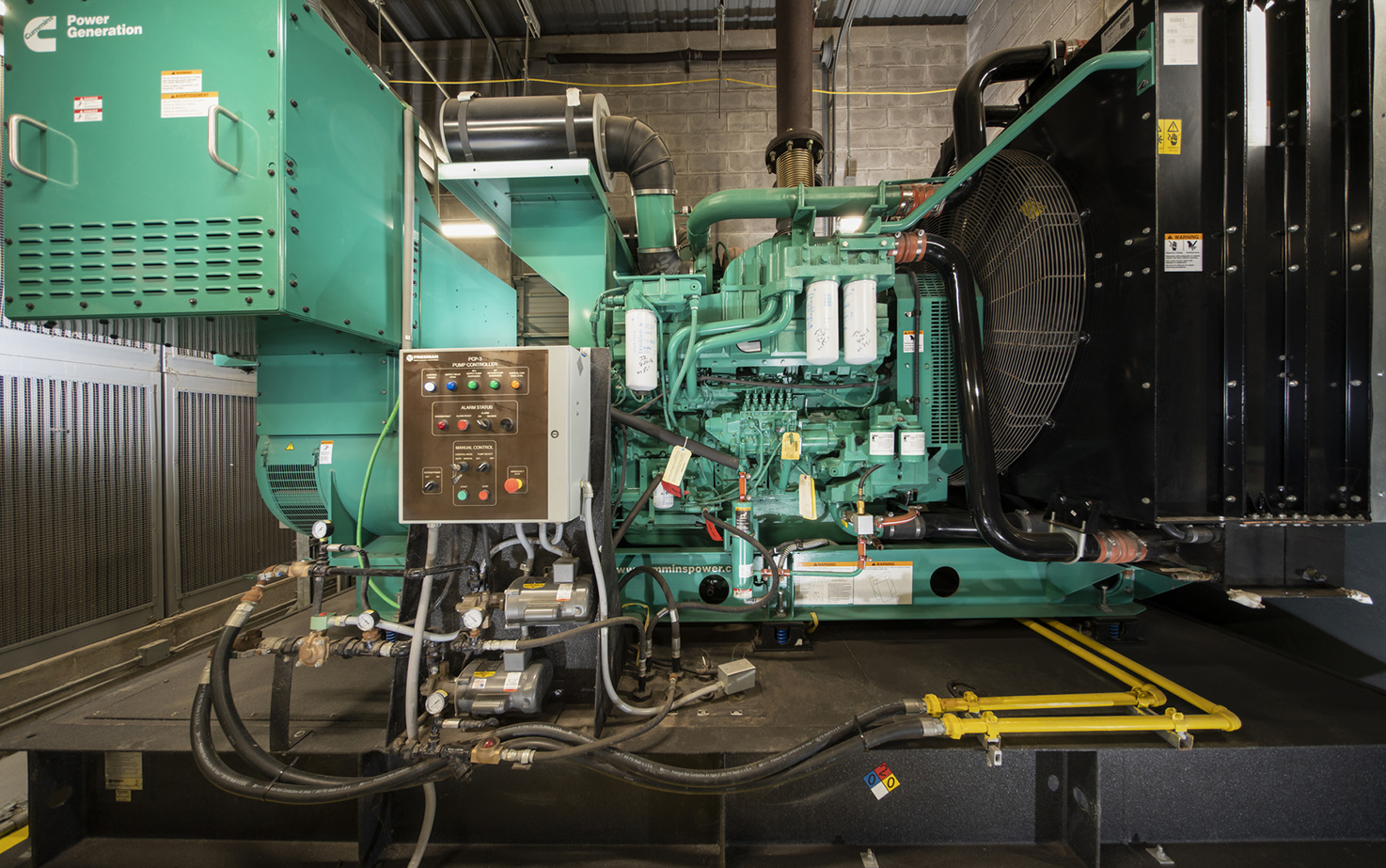
Many existing buildings still have generators located in non-compliant interior rooms. The EPS must be in a dedicated 2-hour fire resistance rated room. While Emergency Power Supply System (EPSS) equipment like the emergency ATS can be in the generator room, most other equipment cannot. This protects the integrity of the emergency generator and related wiring systems. (2025 NFPA 110, Chapter 7)
3. The EPS equipment doesn’t have sufficient space to facilitate inspection, repair, maintenance, cleaning, or replacement.
Some existing installations may not have proper access or working clearance space to safely maintain the generator per the current standards. At least 36” of working clearance or sufficient space to open all hinged doors, whichever is greater, is required. Exceeding the minimum 36” clearance may be necessary to ensure adequate airflow and allow access to and egress from the equipment when the doors are open. (2023 NEC 110.26)
4. Locating emergency panelboards next to normal service equipment.
Emergency panelboards and downstream wiring, while not part of the EPSS per NFPA 110, should be located strategically to reduce the risk of failure from nearby service equipment. Locating emergency panelboards next to normal service equipment is unwise since failure of that equipment could damage the nearby emergency systems. As mentioned in the NFPA 110 Annex, the intent is to “provide maximum fire protection” and similar considerations should apply for systems below 480V or less than 1000A to maximize reliability.
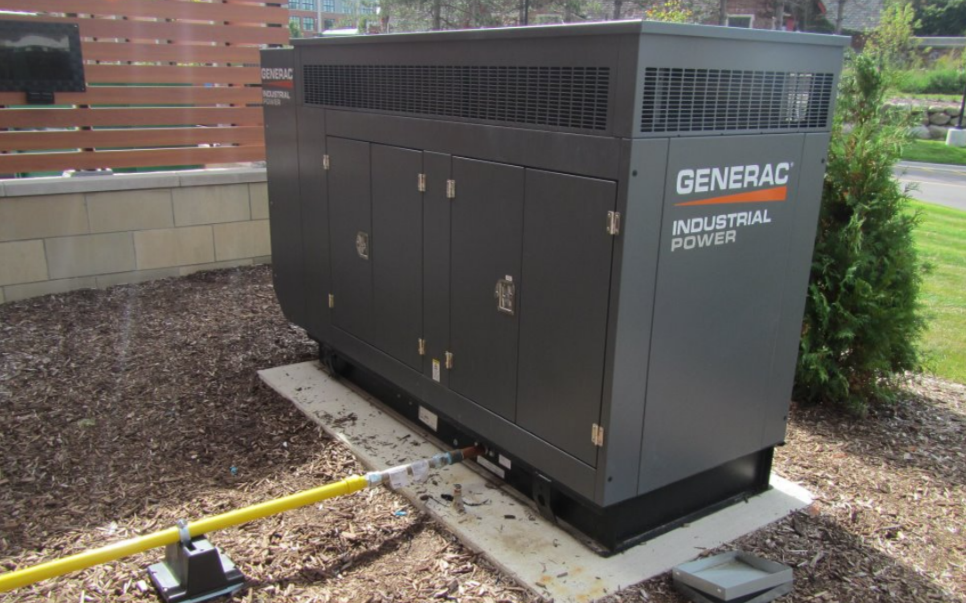
To meet this requirement, some choose to locate the emergency ATS outside, especially when the generator is also outside. However, it’s usually preferable to locate the ATS inside, away from large normal service equipment and in a climate controlled, vandal resistant, protected, and safe environment. NFPA requires the location to be designed and located to minimize the hazards that might cause complete failure such as flooding, fires, icing, and vandalism. In addition, outdoor generators must be protected from lightning per NFPA 780.
5. Lack of selective coordination for emergency systems.
The circuit breaker closest to the fault needs to trip before upstream breakers. This prevents a localized issue from disabling the entire emergency system. This maintains power to unaffected emergency loads during a fault. Unfortunately, achieving this for small systems may be challenging with standard circuit breakers. For example, achieving code required selective coordination with a 100A feeder breaker feeding an emergency panelboard with 20A branch breakers may be impossible. In such cases, a larger feeder breaker may be needed or a fusible emergency panelboard. (2023 NEC 700.32)
6. A lack of surge protection devices (SPDs) for emergency switchboards and panelboards.
SPDs are required for all emergency switchboards and panelboards. This requirement helps protect the integrity of the emergency distribution system from damaging surges. While SPDs are a good practice throughout your electrical distribution system, they are mandatory for new emergency systems. (2023 NEC 700.8)
7. A lack of a connection for a temporary power source during periods of generator maintenance.
When a facility relies on a single backup power source, such as a single on-site generator, a permanent connection point must be provided to allow connection of a portable or temporary generator during maintenance or downtime. There are exceptions to this requirement, including closing the facility when the generator is offline for maintenance. (2023 NEC 700.3(F))
Updating for Code Compliance
Updating the emergency power system to meet current codes may involve:
- Replacing or relocating the old generator.
- Adding a dedicated emergency ATS and emergency panelboard(s).
- Providing or extending isolated emergency circuitry to each emergency load.
While full upgrades are ideal, it can be costly. Here are a couple of options to consider:
Use battery backup for emergency loads instead of relying on the generator. It may be possible to leave the existing generator, ATS, emergency panelboards, and wiring in place and provide battery backup—such as unit equipment, integral batteries, or emergency inverters. The generator may then be reclassified as optional standby, reducing operational and compliance burdens while maintaining generator availability for desired loads.
Reduce the scope of the remodel so that the emergency systems are not required to be replaced. This may be possible if the remodel is limited in scope, and the existing situation is not made worse. For example, if less than 20% of lighting is affected, no new emergency circuits are added, and the generator, ATS or emergency panelboard are not being replaced or relocated.
Avoid Costly Corrections
Don’t neglect your facility’s emergency life-safety systems. These systems are critical and could one day save lives – including your own. Bringing emergency generator systems up to current code not only simplifies the permitting and inspection process, but also helps protect against potential injuries, system failures, and legal liabilities. If the project includes significant changes to the emergency lighting, generator, or related power distribution systems, it’s wise to budget for the necessary upgrades to your old generator and life-safety systems.
Each remodel is unique. Henderson can ensure your remodel is compliant and successful, helping you navigate code requirements while meeting the needs of your facility. Questions on how to stay code compliant in your remodel? We’re here to help.