
Home / Insights / Thought Leadership
The Growth of Outpatient Care
Decentralization commonly refers to transferring control of something to multiple authorities rather than one. When we look at decentralization as it relates to healthcare, there is an interesting trend in the United States that was first seen in Europe in recent years. “Decentralization in Health Care,” a book that was first published in 2007, offers some interesting insights into themes that emerged in Europe that could be used as a roadmap for the healthcare system in the U.S. The themes include a movement focused on patient experience and a shift to outpatient care facilities to serve the whole person.
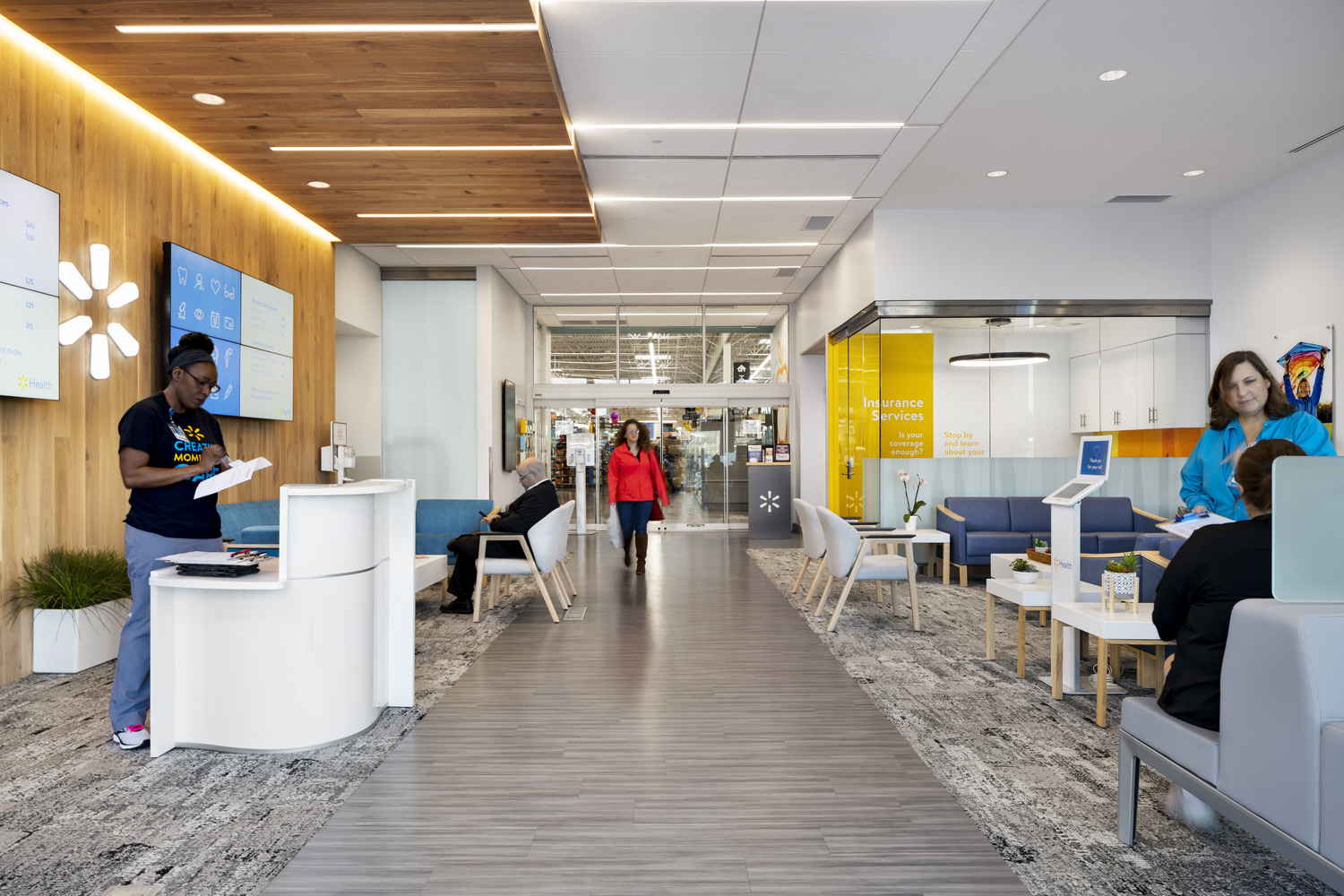
Over the last three years, we have seen a dramatic increase in new and renovated project types including ambulatory surgery centers, cancer centers, imaging centers, and, most notably, retail health. This is in response to changes in the public’s expectations of their health services providers, advancements in technology and governing bodies allowing further medical procedures in an outpatient space, as well as the opportunity outpatient facilities present to reduce carbon emissions generated by the healthcare industry.
Convenience is Breeding Change
The COVID-19 pandemic dominated the landscape of healthcare and changed how the average consumer viewed their approach to their own health care and the role the hospital played in it. Coupled with the lack of certainty related to the scope and cost of health services, consumers became more selective about the procedures they would undergo, which were primarily out of necessity. If such a procedure was capable of being performed in an ambulatory surgical center, this was preferred to avoid unforeseeable costs resulting from admission to a hospital. During this time, many patients sought primary care through clinics and urgent care facilities, as well as those with telehealth capabilities, creating a new expectation of proximity and convenience for their health care. With the adoption of these providers and avenues for health services, convenience and cost of care appear to have become the name of the game for the healthcare industry.
With these patient expectations in place, the door has opened wide to a variety of providers who can meet them while also providing consistent quality of service. Cost, convenience, and consistency of experience are key attributes of many companies offering products and services related to health and wellness as well as retailers such as pharmacies and grocery stores. These entities are leveraging their footprint, brand development, and service delivery expertise to bring convenient healthcare services to all corners of the nation. It was noted in underserved regions that retailers like Dollar General have been reaching patients whom many providers cannot, offering needed, basic healthcare services. The integration of hospitality and aesthetics to enhance the environment and promote the patient experience is also attracting patients.
This adjacency of health and retail has adjusted the role medical office buildings (MOBs) play in the healthcare space. Retail centers like malls, street fronts, and mixed-use developments are now being planned and marketed towards prospective health service tenants. These facilities often have a broad mix of tenants such as fitness centers, grocery stores, restaurants, clothing, and merchandise, offering a convenient solution for physicians to serve patient consumers as they go about their day-to-day lives. It’s also an attractive real estate option for a physician to develop their practice on top of off-campus and on-campus MOBs. For on-campus MOBs, depending on how a healthcare system (both as a patient access and real estate entity) plays a role in a physician’s business model, this can impact the need or desire to stay on-campus as opposed to seeking alternate sites for their practice.
Guidelines are Increasingly Accommodating
With the recent shift to Inpatient and Outpatient guidelines from the Facility Guidelines Institute (FGI) care environments (Operating rooms, exam rooms, etc.) are held to a similar level of design regardless of whether the patient receives treatment at an ambulatory surgical center (ASC) or a hospital.
The 2014 edition of FGI was the first time two independent documents were published: hospitals and outpatient facilities and residential healthcare and support facilities. Starting with the 2018 edition of FGI, the publication was split into three independent documents: hospitals, outpatient facilities, and residential healthcare and support facilities. The intention of the 2018 edition could be viewed as placing patient care within outpatient spaces on equal footing with inpatient or hospital spaces.
Other major updates between the 2014 and 2018 FGI publications included:
- The introduction of sustainable design initiatives and metering.
- The expansion of accommodations for telemedicine services from one paragraph in the 2014 edition to its inclusion within the minimum guidelines and appendix guidelines. These focus on flexibility of space as well as patient privacy.
- The shift from two documents to three independent documents was a large yet intentional shift to allow for flexibility to address the growing outpatient care space types to keep up with the evolving needs of caregivers.
- Space designation terms were updated from 2018 to 2022 to add clarity and alignment between room use and space designation, which impacts the space design parameters.
- Accommodations to serve patients within rural areas with critical access hospitals, behavioral and mental health hospitals, and transportable medical units were added to offer clarity for those spaces and guidelines for design.
- Removing direct emissions due to boiler/water heater venting.
- Reducing emissions associated with natural gas use. Natural gas is traditionally used for hot water, building heating, and steam for sterilization.
- Heat pump technology, which is perfect for medical office buildings, ambulatory surgical centers, and other decentralized healthcare facilities due to the less stringent temperature and humidity requirements.